Tuesday, April 1, 2014

This is not an April Fool's Joke

Spring has finally arrived for real at the refuge and the reptiles are abundant.
Saturday's tour ended with this healthy specimen on Lakeside Drive.

 I counted 11 rattles and a button on him. Amazing how they can crawl and remain perfectly straight, do the rattles remain upright for a reason?

Monday we found this Diamond-backed Water Snake near Laguna Larga on the Bahia Grande Unit. Wonder what he had for breakfast.


An endangered species, the Texas Horned Lizard - Horny Toads when we were young -
was almost invisible in the caliche road bed.


We also found a coachwhip or racer, no camera...
and a collared lizard, again no photo, right in the Volunteer Village.


Butterflies have increased in number, too. This fresh Red Admiral was found at the Convention Center on SPI.

Empress Leilia, I first thought just a Hackberry Emperor,  from Bentsen Rio Grande World Birding Center.

American Lady, also from Bentsen Rio Grande


I also observed Texan Crescent and Tiny Checkerspot around the VC this week.

I remember tent camping in the State Park before the World Birding Center concept  evolved. Great memories and wonderful birds. So much different from all those years ago. Today the birds were mostly grackles and blackbirds and Chachalacas.

 Tuesday, March 25, we birded Convention Center on SPI. The lure of the abundant Texbirds posts drew us away from our normal "day of rest" after 3 straight days of tours.

First bird of the day was a stunning Kentucky
Warbler, followed by Hooded Warbler...

punctuated by too many Northern Parula to accurately count.

Black-and-White Warbler managed to elude my camera.


Spectacular Bottle Brush hosted swarms of Ruby-throated Hummingbirds, also extremely camera shy. Maybe, my trigger finger is just too slow to keep up with the frenzy.

Also observed but undocumented were Nashville and Palm Warbler and hoards of "Butter Butts".

Shorebirds were an after-thought, and I just made a mental note of the numerous peeps, gulls, terns, herons, and egrets. The warbler world was too enticing to desert the tiny feathered jewels. We did record Clapper Rail and Sora by sound from the boardwalk.


 Two different days netted two different Roadrunner taking advantage of the warm South Texas sun to bask with back feathers raised in order to absorb all that Vitamin D. On Saturday, this one perched high in a mesquite, much to the amazement of our visitors. Just before the picture was snapped, the brilliant orange and blue "eye shadow" effect produced oohs and ahhs from us all.


A more traditional pose on Monday  still elicited many oohs and aahs.


 A great to end our 2014 season was a return visit from Ralph, Dan, and Deb from Portland ME.  Ralph is 95, Dan (71) and Deb are his son and daughter. They spend some time every winter in the Valley and we enjoy having them on our tours.  Ralph is truly an inspiration. Can only hope I could age so well and remain so healthy and happy.

Another plus, seems as though we have a following. Several visitors called to make reservations for tours specifically requesting us by name. We must be doing something right. Our 3 months here have passed so quickly, we are looking forward to returning to Laguna Atascosa next January for another season of birding tours. Still a few adventures left on the bucket list for deep south Texas.


Wednesday, March 19, 2014

March 19 Another beautiful day on the refuge

We attempted, unsuccessfully, to find the "grass pipers" at the Progresso Sod Fields yesterday afternoon. The south wind was a steady 25 mph with gusts to 45 mph. The only occupant was a solitary Horned Lark.

Next we tried a location from the Valley Birding and Butterfly Map labeled Rio Rico Road. 1.2 miles south of Hwy 281 then east on paved road to Willacy County Pumping Station on the Rio Grande.


Golden-fronted Woodpecker, un-ID'ed warbler, and a Border Patrol Officer were our only observations. 

The scenery was lovely, but we were warned that we were in a dangerous location. 

Highway 281, the Old Military Highway, must have an historical marker every quarter mile. 


The Thornton Skirmish, April 25, 1846, is noted as the spot where American blood was shed on American soil when Captain Phillip Thornton and his 42 Dragoons were attacked by Mexican soldiers.

The larger marker to the left details Spanish colonization to prevent French control of the area.


For the second night in a row I had a clear sky with moon rising about 9:46, a record down here this year. Seems like we've had clouds, mist, rain, and cold for the last 10 weeks.

The just past full moon served as a guide for locating Mars.


Orion, Taurus, and the Pleiades were high overhead with Canis Major and Canis Minor following on Orion's heels. 

On my first foray out the pauraque were silent, but as soon as the moon rose they began their melodic calls. Coyotes, song dogs, sang in the distance. 

I hit the floor on the first alarm this morning to look out expecting early morning fog. I could feel and smell the humidity, but the setting moon and stars shone brightly. 


Pauraque still called softly and wild turkey gobbled just outside the circle of light from Volunteer Village. 

After spending the morning on income tax preparation, I felt the need for a nature transfusion, so we walked to the visitor center to check out the water features. 

Located Northern Parula, Orange Crown, Titmouse, and more Grackles and Red-wings than I wanted. Altamira Oriole, Green Jay, Long-billed Thrasher, and Olive Sparrow were also present. 


Turkey Hen was at the gazebo...


Tom was outside the visitor center... splendid breeding plumage

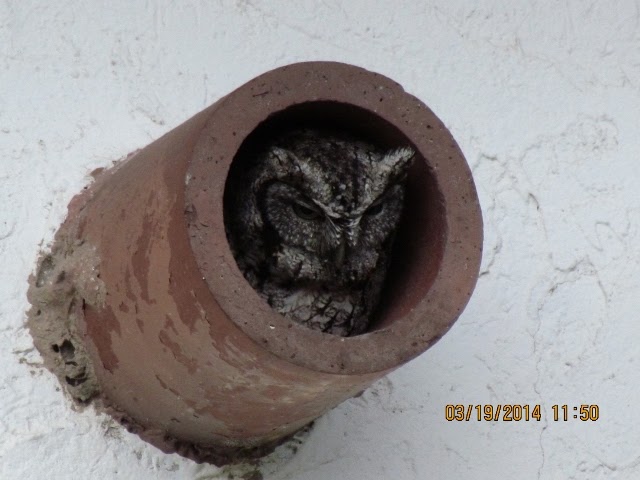
His loud gobbles woke up the Screech Owl
Mr. Tom strutted and spared with his own reflection in the VC windows for 20 minutes...


I snapped 43 pictures before other visitors arrived startling him into flight so fast I had no chance to grab the camera. 


Spring has truly arrived with the flowering of the allthorn... wish I had smell-o'vision. 


Tuesday, March 18, 2014

March 18? Holy Cow

Where has the time gone? What have I been doing?

We spent one long Saturday at Gladys Porter Zoo in Brownsville at the Ocelot Conservation Day on March 8. Alvin and I were in charge of tickets for the Lucas Miller Show
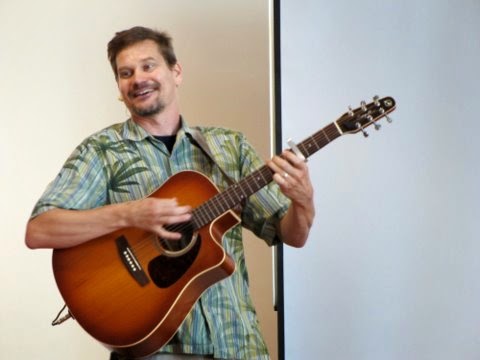
The Singing Zoologist

followed by an appearance by Sihil, the Ocelot Ambassador from the Cincinnati Zoo.


We handed out tickets to 782 people, mostly local families, while almost 1300 attended the event. 

In addition to Sihil and Lucas, the other star of the day, present only in her photos, was the newest member of our ocelot family on the refuge. 

 Discovered on trip camera on February 14, she is estimated to be between 3 and 5 months of age.


Obviously very curious and appearing quite healthy, she has Hillary, the ocelot biologist, and the ocelot interns walking on air. 

Then it was back to tours on Sunday and Monday. We found two different  juvenile White-tailed Hawks (WTHA) that caused us to scratch our heads and say "HMMMM" 

This was the only one close enough for a photo. 

Tuesday, March 11, we took a special boat tour with Scarlet Colley, the Dolphin Whisperer, out to the edge of South Bay in search of the Mangrove Warbler, a subspecies of Yellow Warbler with great success. The warbler was calling loudly and was visible although very active. I made no attempt at photography, but Leon, Another birding tour volunteer, took several photos (which he still hasn't shared with me). In every picture, the bird was slightly behind a green leaf, but the chestnut neck was clearly visible. 


Another highlight of the tour were the dozen or so dolphins that came to play and Scarlet's "dolphin Dog" Rozzie. 


When the cool, damp, misty day caused Rozzie to begin to shiver, Scarlet asked if I would hold him for a bit. She wrapped him in a sweat shirt and I cuddled him close. Oops, she made the mistake of saying the word DOLPHIN and he immediately jumped out of his warm cocoon and began his dolphin patrol at the bow of the pontoon boat.  


Saturday's tour to the Bahia Grande yielded this Cactus Wren nest under construction. We watched the bird return 3 times to add nesting material. 


On Sunday, I couldn't relocate the nest. Amazing how all those prickly pear patches look alike.

We dipped completely on the wren, but the Cassin's Sparrow were highly vocal and visible, skylarking all along the 15 mile tour.

On the Monday tour, I relocated the nest after studying my photo for easier ID purposes. Alas, no activity in the vicinity. Maybe the 40 degree change in temperature caused the wren the postpone the nest construction.
The Cassin's were also silent and almost non-existent with only 3 being recorded. A great find was a Northern Parula up on the loma with an enormous flock of Butter Butts. Sorry, no photo!


After putting the van away after our last tour of the weekend, we opted to indulge in a St Patricks Day lunch at Bayside Cafe in Laguna Vista where I satisfied my corned beef and cabbage addiction for the year.
Returning to the refuge, we detoured by the Cameron County airport after witnessing an advertising banner being dropped. Spring Break at South Padre is a whole 'nother story.

We witnessed the tow plane using a tail hook to lift a banner to loft over the merry makers on the beach. Often wondered how they managed to get those things airborn.


The hanger  and tower still serving the airport was constructed during World War II when the original 11,000 acres of the refuge were an artillery training range as a part of HAGS, Harlingen Aerial Gunnery School. Ammunition was stored at the sub-base and was loaded onto the airplanes at the airstrip for bombing practice on South Padre Island.

The road into the airport is on the actual old runway and tarmac. Sort of gives me goose bumps to think of the other transients of this concrete slab. 

Miles of cement still silently inhabits this sliver of coastal prairie, long enduring the harsh environment. 


On the final leg home, a trio of javelina performed a daring gymnastic routine. The fresh green newly sprouted sorghum maize was an overpowering temptation. 


Life is never dull on the refuge. 


Sunday, March 2, 2014

Birds and Other Wild Things

Laguna Atascosa Tour on Feb 28 found this pair of White-Tailed Hawks. The one on the
 left still has the dark head of a second year bird and the breast still shows some dark splotches. 


The Bahia Grande Unit on Feb 24 had multiple singing Cassin's Sparrow. No skylarking just yet.
Love the cactus "moon"!


On Friday, we braved the howling wind for Valley Nature Center in Weslaco. Left my camera in the Jeep, naturally. Used my cell phone to snap a picture of 5 Clay-colored Thrush in one tree never dreaming I would get anything.


Imagine my surprise when I put the photos on the computer and actually had captured 4 of them. Definitely not quality, but documentation. 

Not all the wildlife on the refuge has feathers... On the Saturday 2 PM bird walk, this king-sized Western Diamondback was checking out the Wood Rat nest. We didn't see too many birds after that encounter, hard to see much of anything when we're watching our feet all the time. 

Waiting for the next cold front to arrive... So tired of winter cold. 

Friday, February 28, 2014

Rainy Day visits to Museum February 26

Another cold front arrived Tuesday afternoon, will winter never end? The wind changed to the north and the temp dropped 11 degrees in 10 minutes. Not a good day for outside activities, we opted on the Harlingen museum scene for Wednesday's activities.

The Art and Heritage Museum had a quilt display featuring variations on the Jacob's Ladder pattern. Made us think of Kathy Lupardus and her beautiful handiwork. Photos of the quilts were not allowed, but, of course, a picture book of the 18 quilts was available for purchase at the gift shop. Needless to say, we passed on that option.

An 18 minute video on the history of Harlingen produced by 2 of the local high schools provided an interesting overview narrated by local citizens.  On the grounds is located the first house in Harlingen, named for a city in the Netherlands. constructed by Lon C. Hill. in 1904.
We visited the parlor, the kitchen, a bedroom, and Lon Hill's law office. He was a successful lawyer in Beeville who moved to the area after trying a case in Brownsville in 1903. He started a rice plantation, owned a brick factory, started a railroad, and developed the canal system necessary for irrigation. He also built a sugar mill, which was burned by Mexican bandits in 1917. He built the first school next door to his house so his 8 children along with neighbor children could receive a proper education. Each Hill child had a personal firearm and slept with a dark colored robe on the foot of the bed in case of bandit attack during the night. 

Next door to the Hill House is the first hospital opened in 1923 by Ida Gilbert and Marie Yeager in 3 old army barracks. On display were a doctor office, a dental office, a maternity room, and a pharmacy. The old instruments resemble medieval torture tools more than helpful healing aids. 


Across the courtyard is the Paso Real Stage Inn built in 1860 on the banks of the Arroyo Colorado near present day Rio Hondo. A ferry crossing was also located there. The Inn also housed the post office still intact inside the structure. 


 The historical museum, unfortunately, is currently closed for renovations. This building was formerly the Air Force Police Squadron and Brig. The entire museum complex is located on the grounds of the Harlingen Army Airfield (HAGS), an artillery training facility in WWII. The sub-base where the actual gunnery training facilities were located is now Laguna Atascosa NWR. 

Just a few blocks away is the Marine Military Academy and the Iwo Jima Memorial Museum. By the time we reached this destination, the mist had turned to rain and the wind gusts had increased considerably. We opted to take a few photos from the warmth of the cozy jeep. 


Harlon Block, a Weslaco native, was the man holding the flag pole at its base. He was killed 6 days later and is buried at the base of the monument. 
The small museum is filled with memorabilia and personal belongings of Marines who participated in the siege. A 30 minute film described the Japanese stronghold, a catacomb of underground passages and the hardships faced by the Marines during their 5 week long struggle for the 2 mile by 5 mile piece of volcanic rock. 

The monument is the original plaster that was used to cast the bronze version located at Arlington National Cemetery. Donated by the artist, Dr. Felix W. de Weldon. On active duty with the Navy, he constructed a scale model of the event within 48 hours of its happening. He selected the Military Academy in Harlingen as an inspiration to the cadets. 

Along the drive over, we saw a  flocks of gulls and Black-bellied Whistling Duck.